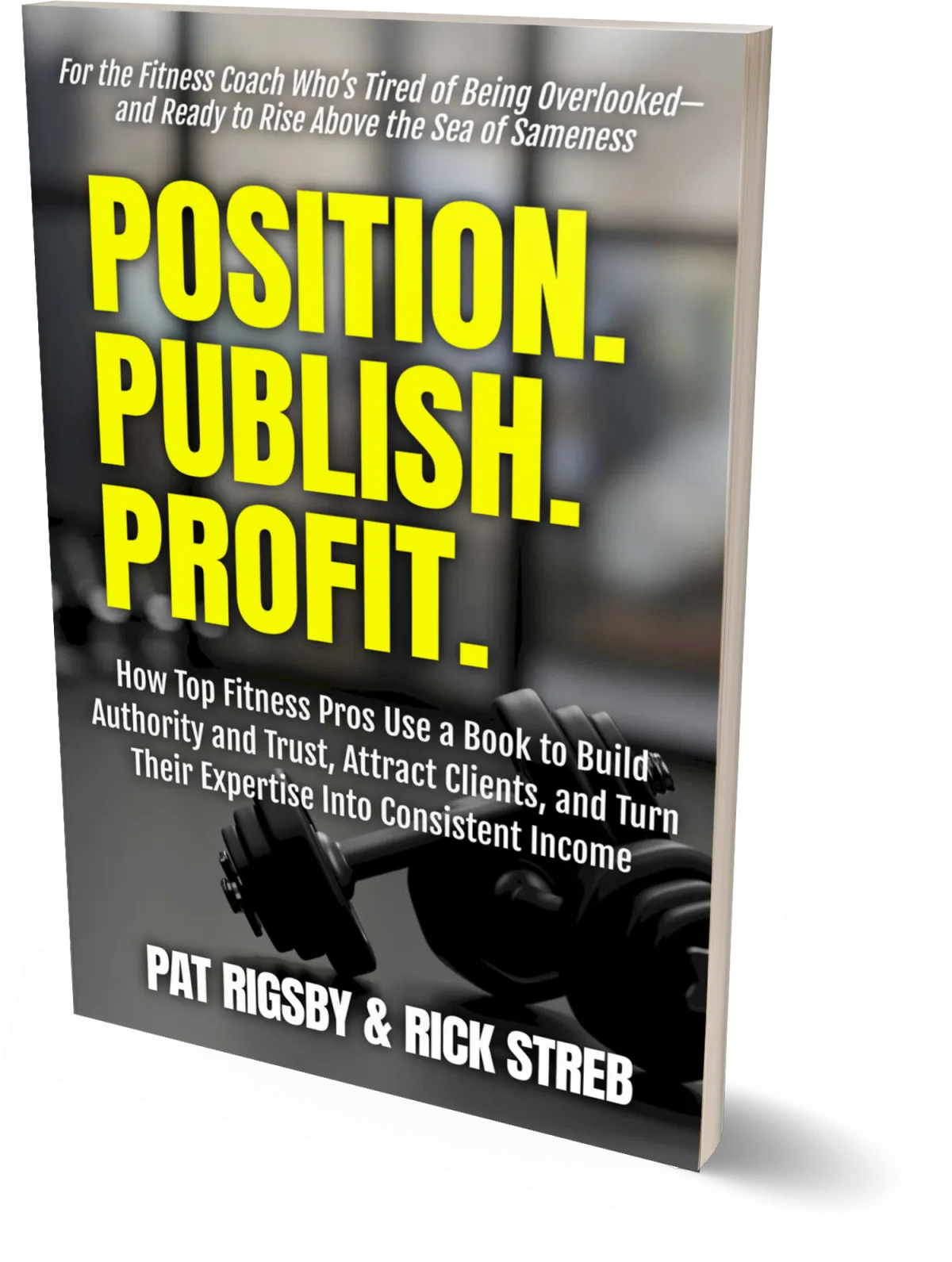
How a Book Creates Clarity, Authority, and Pre-Sold Conversations
Why being great at what you do isn’t enough, and how making your expertise clear before you even have the conversation changes everything.
You're not new at this.
You're skilled. Certified. Experienced. You've put in the years. You've changed lives.
And yet, when it comes to your business, it often feels like none of that is obvious from the outside.
You're surrounded by louder voices. Lookalike offers. People with less experience but better positioning.
Somehow, they get the attention, the authority, and the higher-paying clients, while you're left explaining yourself on sales calls and competing on price.
That's not a talent problem.
It's a clarity problem.
In a crowded fitness market, expertise doesn't win by default.
Understanding wins.
The coach who gets chosen isn't always the best one, it's the one whose value is instantly clear, whose ideas feel trustworthy, and whose authority is obvious before a conversation ever starts.
And when that clarity is missing, it creates pressure.
That pressure is what shows up as price objections, comparison shopping, long calls that go nowhere, and the quiet feeling that things feel harder than they should.
Not because you’re doing something wrong.
Because clarity is showing up too late.
That’s why the same five problems keep appearing, regardless of industry, experience level, or credentials.
And it’s also why the same solution keeps working when it’s implemented correctly.
It has to educate.
It has to differentiate.
It has to justify.
It has to persuade.
Most professionals don’t struggle because they lack skill.
They struggle because their expertise is invisible until you finally get to have a conversation with a prospect.
By the time that conversation happens, a lot is already working against you.
The prospect doesn’t fully understand what you do.
They don’t know how you think.
They don’t have a clear frame for why your approach is different from anyone else’s.
So the conversation ends up doing too much work.
1. People Don’t Hire the Best Expert. They Hire the Clearest One.
Why clarity beats competence in real-world decision-making.
Most people like to believe their decisions are made rationally.
They're not.
They’re made quickly, based on understanding.
A prospect doesn’t deeply audit your expertise. They don’t read between the lines. They don’t analyze your methodology the way you do.
They ask themselves a much simpler question:
“Do I understand this person well enough to feel confident moving forward?”
“Do I trust them enough to spend money with them?”
If the answer is no, their brain does what it always does. It simplifies.
They compare options.
They lean toward what feels familiar.
They delay the decision.
Not because you’re average.
Because you’re unclear.
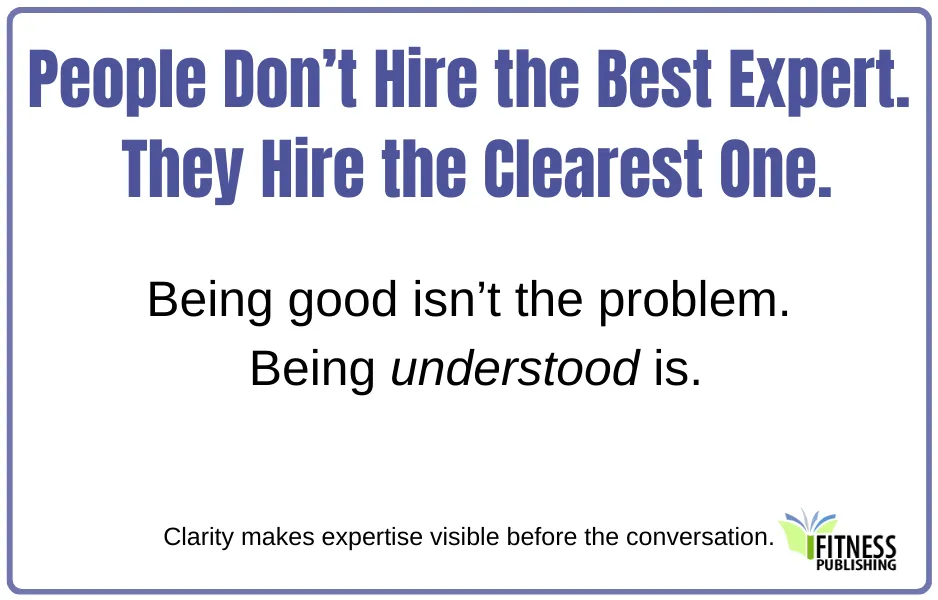
This is where a book quietly does something almost no other asset can do.
A book is your clarity accelerator.
It's your unfair advantage over your competition.
A book forces your ideas into a clear, linear structure. It removes ambiguity about what you believe, how you work, and why your approach exists in the first place.
It allows someone to understand your thinking without you being present.
Instead of trying to explain yourself in fragments across posts, conversations, and calls, your expertise lives in one coherent narrative.
Clarity stops being dependent on your time and energy.
It exists before the conversation ever starts.
And once clarity exists before the conversation, something else changes too.
People don't just understand you better. They start valuing you different.
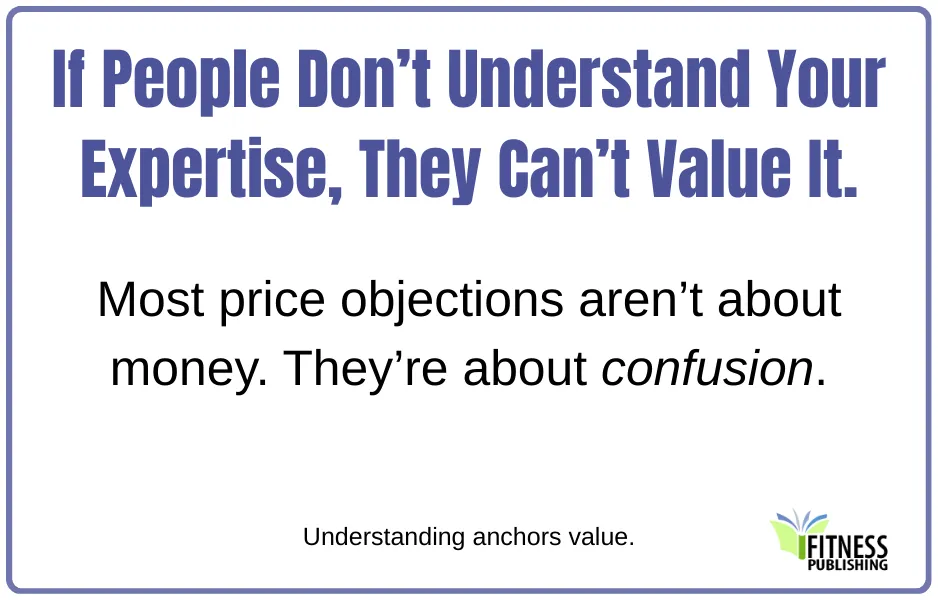
2. If People Don’t Understand Your Expertise, They Can’t Value It.
Why confusion turns into price objections, hesitation, and comparison.
Most objections aren’t really about money.
They’re about uncertainty.
When someone doesn’t fully understand what you do or why your approach works, price becomes the easiest thing to question. It’s the only concrete variable they can grab onto.
That’s why explaining harder on the call rarely works.
By the time pricing is discussed, the real issue has already been decided. The prospect still doesn’t fully understand the value.
A book changes the order of operations.
Instead of value being introduced late and under pressure, it’s established early and calmly.
The reader learns at their own pace. They see your reasoning unfold. They understand not just what you recommend, but why you recommend it.
By the time pricing ever enters the picture, it’s no longer floating in a vacuum.
It’s anchored to understanding.
That’s when resistance naturally fades, not because you convinced someone, but because they finally understand what they’re deciding about.
And when value is no longer abstract, the relationship shifts.
Not just financially, but in how you're perceived.
That’s why explaining harder on the call rarely works.
By the time pricing is discussed, the real issue has already been decided. The prospect still doesn’t fully understand the value.
It’s anchored to understanding.
That’s when resistance naturally fades, not because you convinced someone, but because they finally understand what they’re deciding about.
And when value is no longer abstract, the relationship shifts.
Not just financially, but in how you're perceived.
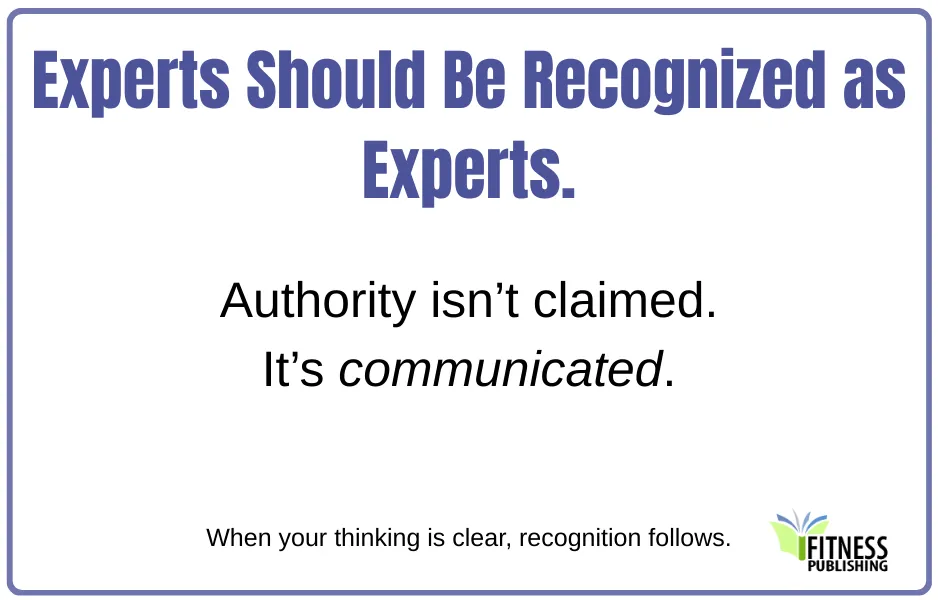
3. Experts Should Be Recognized as Experts.
Why authority isn’t claimed, it’s communicated.
Most professionals don’t want admiration. They want appropriate recognition.
They want to be trusted.
They want their recommendations taken seriously.
They want conversations to start at a higher level.
But recognition doesn’t come from confidence or credentials alone.
It comes from visibility of thought.
When your thinking is invisible, people don’t know how to place you. So they default to treating you like everyone else.
A book is a public declaration of your point of view.
It doesn’t just say that you know something. It shows how you think, and exactly how you do it.
That shift matters.
People stop asking you to prove yourself.
They reference your ideas instead of questioning them.
They treat your guidance like guidance.
The book becomes a proxy for authority.
It speaks for you when you’re not in the room, and it sets the tone before you ever open your mouth.
That recognition doesn't just feel better.
It changes how conversations actually unfold.
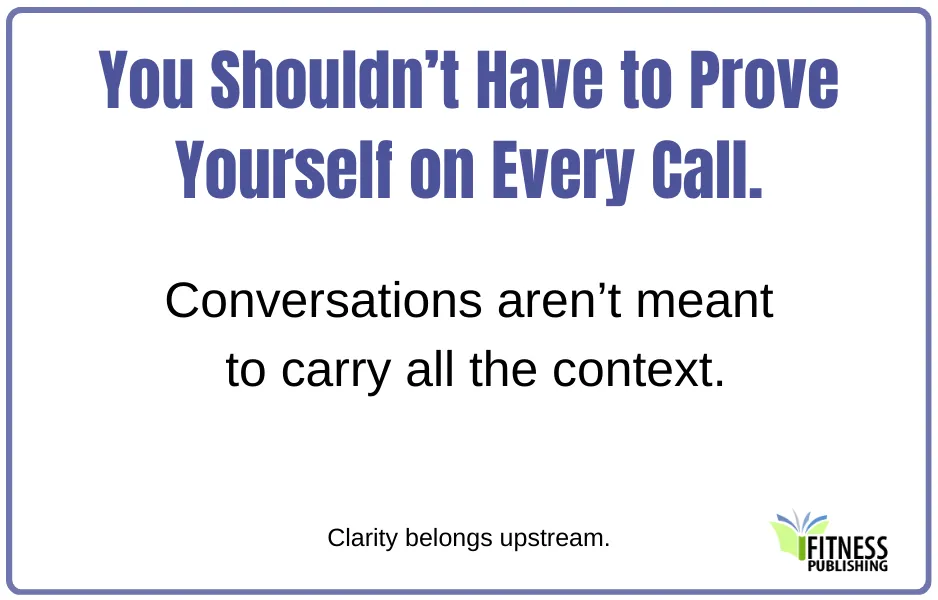
4. You Shouldn’t Have to Prove Yourself on Every Call.
Why sales get easier when trust starts earlier.
If every call feels like starting from zero, that’s not normal.
It’s a signal.
Conversations aren’t meant to carry all the context. They aren’t meant to educate, persuade, and differentiate all at once.
When clarity shows up too late, the conversation becomes hard.
You’re explaining your background.
You’re walking through your process.
You’re filling in gaps that shouldn’t even exist.
A book moves that work upstream.
Instead of context being introduced live, it’s already been absorbed.
Instead of trust being built from scratch, it already exists.
Calls stop being about explanation and start being about direction.
That’s when conversations feel calmer, shorter, and more productive. Not because you changed how you talk, but because the person on the other side arrived prepared.
And when conversations stop carrying all the weight, something else becomes obvious.
The problem was never the conversation itself.
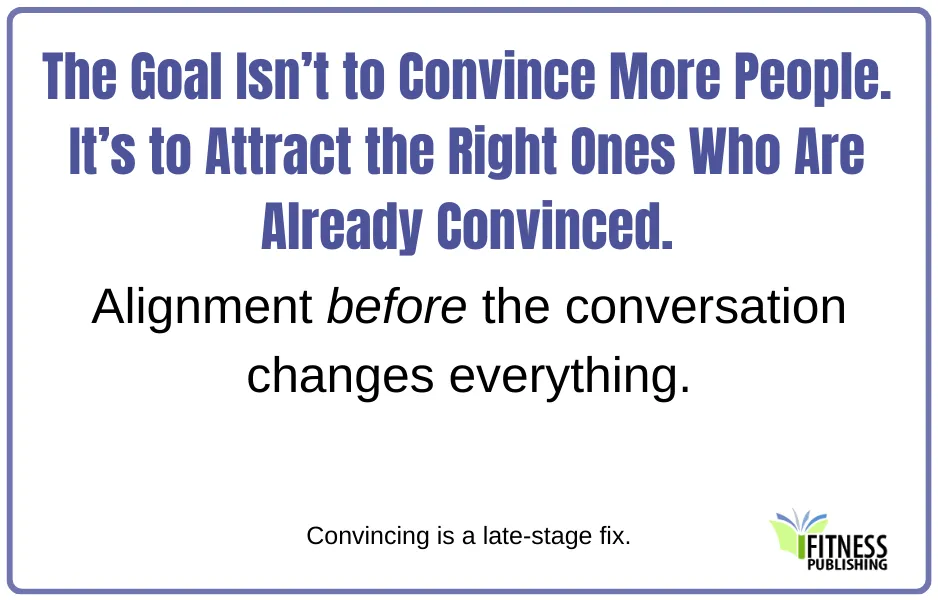
5. The Goal Isn’t to Convince More People. It’s to Attract the Right Ones Who Are Already Convinced.
Why alignment before the conversation changes who shows up.
Convincing is exhausting.
And it’s usually a sign that alignment is missing.
When people show up without understanding your philosophy, the conversation turns into persuasion. When they show up already aligned with your philosophy, it turns into confirmation.
A book quietly filters for alignment.
People who resonate keep reading.
People who don’t move on.
No awkward sales pressure.
No chasing.
No convincing.
The people who reach out have already opted in mentally.
They share your language.
They understand your assumptions.
They know why they’re there.
That’s when selling stops feeling like selling.
It becomes a simple conversation about fit.
This is why the shift isn't about doing more.
It's about deciding where clarity should live.
The Book Isn’t the Point. Clarity Is.
Why the most important decision isn’t what you sell, but how your expertise is understood when you’re not in the room.
A book isn’t magic.
It doesn’t work because it’s a book. It works because it forces clarity.
It requires you to organize your thinking, articulate your beliefs, and communicate your expertise in a way others can actually understand...
All the things that are minimum requirements if you want have a successful business.
There are other tools that can help with this, but very few do it as cleanly, calmly, and durably.
The real question isn’t “Should I write a book?”
It’s “How do I want my expertise understood when I’m not in the room?”
This framework is how we answer that question.
If you want to see how this framework applies to your business, my book walks through it step-by-step.
And if you’d rather talk it through, that option’s there too.
Here's my schedule to book a free call with me.
No pressure.
Just clarity.